
Top-Rated Attractions & Places to Visit in Agra
The Taj Mahal is an icon of India, drawing millions of tourists to the city of Agra every year. This breathtaking landmark is every bit as incredible as you've imagined. But while most travelers might be eager to escape Agra's pushy touts and exhausting crowds as soon as they've left the Taj Mahal, you should consider sticking around a bit longer.
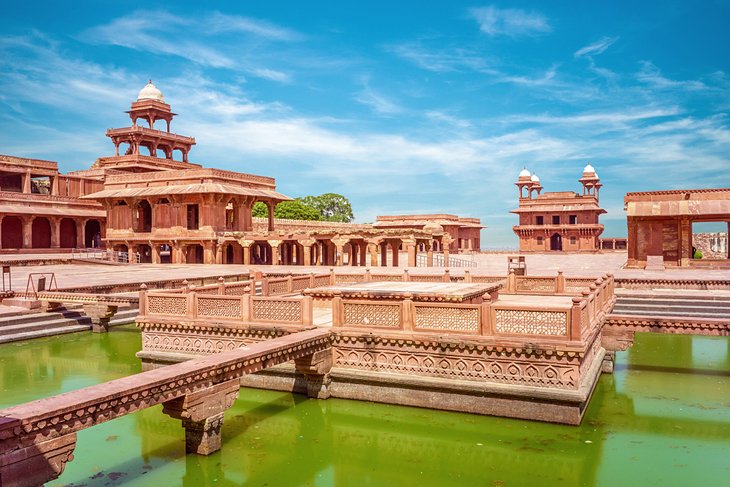
The Taj Mahal is just one of many amazing places to visit in Agra. While here, you can explore the historically significant Agra Fort; experience the impressively beautiful Tomb of Itimad-ud-Daulah; see one of the largest mosques in India at Fatehpur Sikri; and find respite in Mehtab Bagh, a serene park in the shadows of the Taj.
Animal lovers, take note: Agra boasts two compassionate wildlife projects (the Agra Bear Rescue Center and the Elephant Conservation and Care Center) that welcome tourists to learn about some of India's most beloved creatures.
Don't let other tourists convince you there's nothing to see in Agra besides the Taj Mahal. Plan your trip to this heritage hot spot with our list of the top attractions in Agra.
1.Taj Mahal:
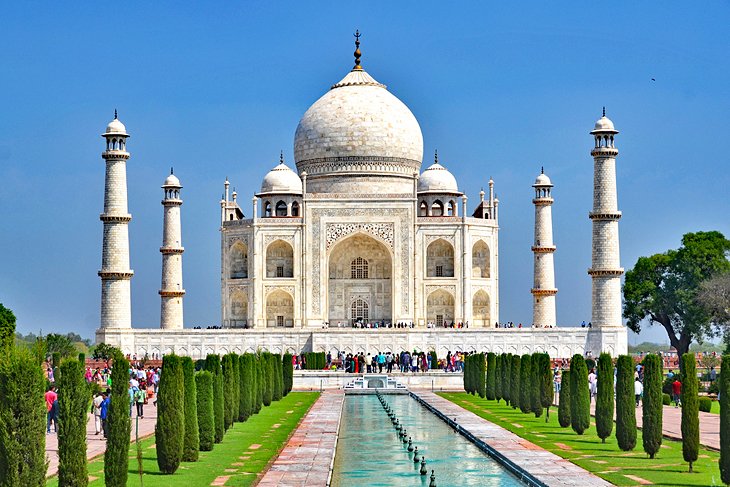
You've seen it in history books, on postcards, and in social media posts. But now, you've made your way to India, and you finally have the chance to see the Taj Mahal in real life.
The magnificent structure dates back to the 17th century. Mughal emperor Shah Jahan was heartbroken after his beloved wife, Mumtaz Mahal, passed away during childbirth, and decided to pay tribute to her with a white mausoleum. Construction took more than 20 years to complete and required the manpower of around 20,000 laborers.
There's never a bad time to see the Taj Mahal, but it's worth getting here early—the building seems to radiate at sunrise. Tourists can enter the UNESCO World Heritage Site via the west and east gates. Once inside, explore the ornamental gardens, which feature calming water features that reflect the Taj. Then, head inside the Taj itself and admire its perfect symmetry and white marble with elaborate floral cavings and semiprecious stone inlays.
Sightseeing around the Taj Mahal complex continues at the Kau Ban Mosque, west of the Taj, and the Jawab, a building intended to mirror the mosque and preserve symmetry on the main structure's eastern side.
Address: Dharmapuri, Forest Colony, Tajganj, Agra
Official site: https://www.tajmahal.gov.in/
2.Agra fort:
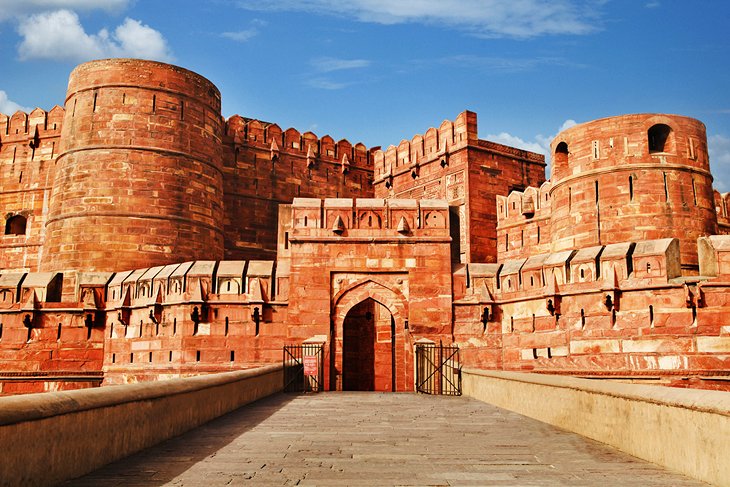
The Taj Mahal isn't the only UNESCO World Heritage Site in Agra—the city is also home to Agra Fort, a centuries-old red sandstone fortress that was once the imperial city for a succession of Mughal rulers.
Sightseeing here is like wandering around a city within a city. The most extraordinary building at Agra Fort is Jahangir Mahal, a massive palace that blends stunning Hindu-inspired features (like overhanging enclosed balconies) with Central Asian architectural elements (such as the signature pointed arches). Inside, tourists can see the gilded central court where royal women once passed their days.
Tourists can also check out a range of other noteworthy structures, including Anguri Bagh (a courtyard with puzzle piece-like outlines of gardens around water channels), Khas Mahal (a palace with pavilions made of white marble and red sandstone), Musamman Burj (an octagonal tower with intricate marble inlay work), and Diwan-i-Khas (a gathering hall featuring a pair of black and white marble thrones).
With so much to see, Agra Fort will require at least a few hours on your itinerary. It makes for a great afternoon stop after a morning at the Taj Mahal.
Official site: https://www.agrafort.gov.in/
3.Itimad-ud-Daulah's Tomb
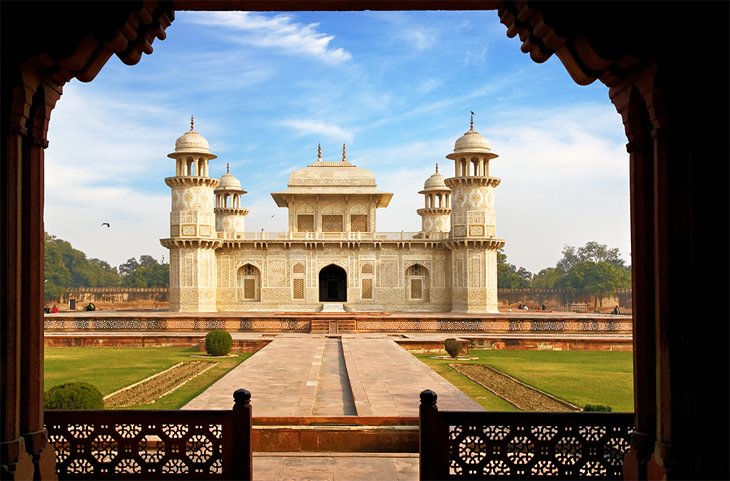
On the banks of the Yamuna River sits another one of Agra's exquisite structures: Itimad-ud-Daulah's Tomb. The mausoleum contains the remains of Mirza Ghiyas Beg, a Persian official who served the Mughal empire, as well as his wife.
Legend has it that this jewelry box-like tomb was actually the inspiration for the Taj Mahal, earning it the nickname "Baby Taj." The red sandstone and marble structure features 13-meter-high hexagonal towers on each corner.
The most noteworthy thing about this attraction, though, is that it was the first structure to use pietra dura, the iconic Indian inlay technique that uses semiprecious stones to create decorative floral designs in marble. You'll see exquisite geometric patterns, depictions of vases and cups, and delicate flower bouquets from floor to ceiling of the graceful structure—reminiscent of those on the Taj Mahal.
Despite its beauty, Itimad-ud-Daulah's Tomb gets far fewer visitors than other attractions around Agra, making it an ideal place to appreciate the lovely features without the crowds.
Address: Moti Bagh, Agra
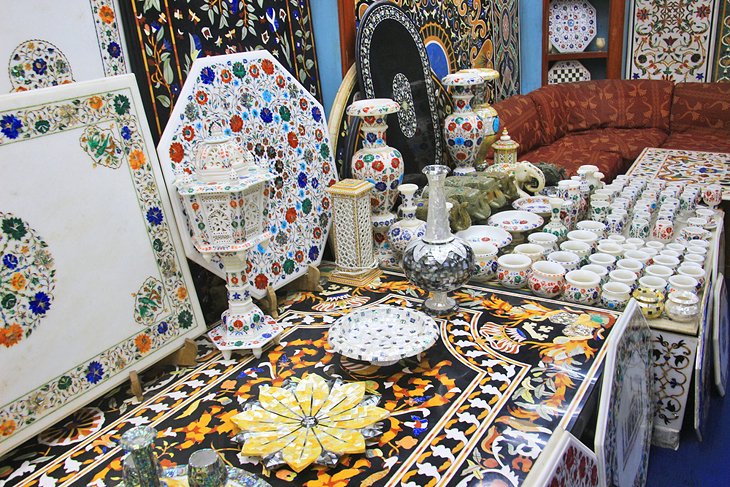
The graceful attractions around Agra will make any tourist fall in love with marble inlay. If you find yourself eager to take a piece of this craftsmanship home with you, head to Subhash Emporium. The boutique has a decades-strong reputation as the go-to place to shop for stone handicrafts in Agra.
Inside, you'll find tons of travel-friendly marble inlay souvenirs, like floral coaster sets, animal statuettes, small boxes, and candle holders. The store also sells larger items, like lamps, tabletops, and carved-marble trays, that it can ship directly to your home.
Even if you don't want to shop, it's worth swinging by Subhash Emporium for its captivating demonstrations. The experienced craftspeople here will show you the precise art of inlaying small pieces of polished stone into hard marble—which might make the high prices of these items seem slightly more reasonable.
Address: 18/1, Gwalior Road, Opp BSNL office, Shahzadi Mandi, Agra
Official site: http://www.marbleemporium.com



0 Comments