
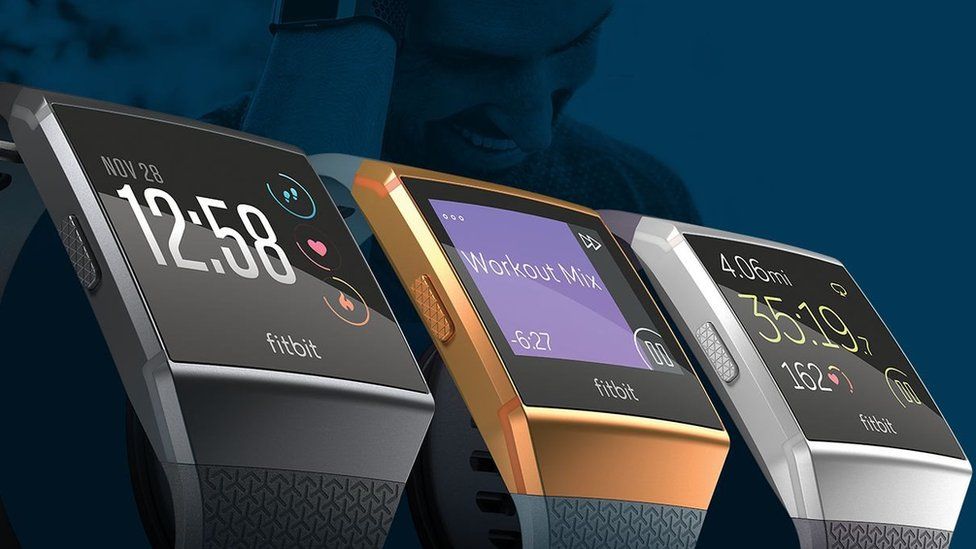
Fitbit has put on sale its first fully-featured smartwatch.
The Ionic differs from the firm's existing Blaze watch in that third-party developers will be able to release apps and watchface designs that can be installed on the device.
It also introduces a sensor that can detect blood oxygen levels.
Fitbit has also announced a forthcoming "special edition" in partnership with sportswear firm Adidas, mirroring the Apple Watch tie-up with Nike.
Until recently, Fitbit was ranked the world's bestselling wearable tech brand. However, market research firm IDC reported in June that it had been overtaken by both Xiaomi and Apple in terms of shipments over the first three months of the year.
Fitbit recently reported that its second quarter sales were 40% down on 2016's equivalent figure, leading to a $58.2m (£44.9m) net loss for the period.
"It's a tough market for Fitbit - not least the dramatic drop in North American sales it has experienced - and the whole wearables category has certainly not lived up to expectations," commented Ben Wood from the CCS Insight tech consultancy.
"But the firm is continuing to push forward."
The standard version of the Ionic has been priced at £300, making it more expensive than the current cost of Apple's entry-level smartwatch but less costly than the Apple Watch Series 2.
Although Fitbit has started accepting pre-orders, it has said shipments will not start until late September.
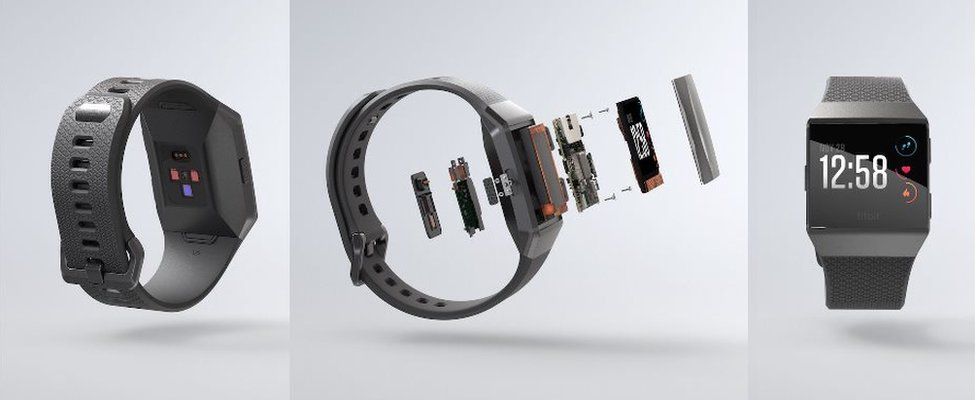
Ionic's release has been much-anticipated since Fitbit bought crowdfunding success story Pebble's smartwatch business in 2016.
It cancelled work on Pebble's own devices, but adapted its software to create a new operating system - Fitbit OS - which promises to work with the Android, iOS and Windows platforms.
The San-Francisco-based company aims to release a web tool to allow developers to create their own software for the device from next month.
This will include access to the device's NFC (near-field communication) chip, which could allow it to be used to open vehicles and building doors fitted with compatible smart locks.
By contrast, Apple has locked down access to its own mobile devices' NFC chips on security grounds, although this is expected to be relaxed later this year.
The new device also marks the first time Fitbit has included an SpO2 sensor in one of its wearables.
The component estimates the amount of oxygenated haemoglobin in blood.
The firm suggests this could be used to provide new types of health alerts, including warnings of sleep apnoea - a disorder that causes people to briefly stop breathing or take shallow breaths during rest.
The technology is relatively rare outside of medical equipment, although Nokia does include an SpO2 sensor in its Pulse Ox wristband.
Fitbit also says the Ionic's heart rate tracker is more accurate than those found in its other products.
The new watch's other advertised features include:
- more than four days of use on a battery charge, although this drops to 10 hours if GPS location data or music playback via Bluetooth is used
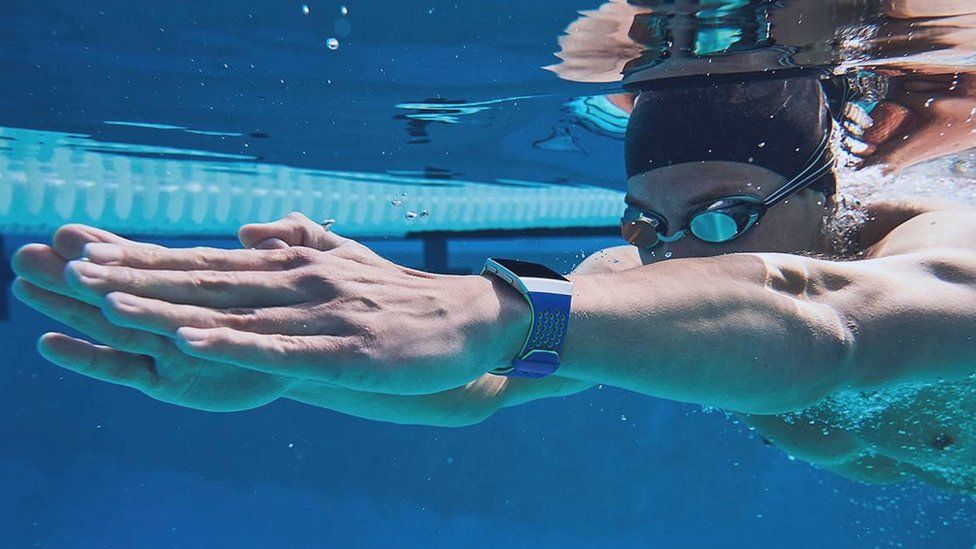
- water resistance to depths of 50m (164ft)
- storage of 2.5 gigabytes, which Fitbit says allows 300 songs to be stored on board
- touchless payments via the forthcoming Fitbit Pay facility
"The Ionic is very much orientated towards being fitness-first rather than fashion-first, and that will be a challenge," said Mr Wood.
"But the firm has a loyal group of users who seem interested in upgrading to a new Fitbit product that is more capable.
"The social element of its brand has also been a big success -where you get groups of people competing over the number of steps they have taken among other things - which should help sales."



0 Comments